
Ever looked at a fresh pint and wondered what actually happened before it reached your glass? The answer involves more than grain, hops, and yeast. Inside a working brewery, specialized beer brewing equipment helps brewers turn simple ingredients into the craft beers you know and love.
At Little Miami Brewing Company, our small-batch, 7-barrel brewery sits alongside the Little Miami River and Bike Trail in historic Old Milford. Our brewers work through each stage of the brewing process with care, from preparing the grain to fermenting and conditioning each batch.
In this blog, we’ll take you behind the scenes to explore the equipment that makes craft beer brewing possible, how each piece fits into the brewing process, and what you can experience.
From Grain to Glass: Where the Brewing Process Begins
Every beer starts with ingredients, but equipment transforms them into finished beer. The brewing process involves several important stages, each of which relies on specialized tools.
The Mash Tun: Turning Grain Into Wort
The first major step is mashing. Brewers combine milled grain with hot water in a mash tun, allowing enzymes to break down starches into fermentable sugars.
The resulting liquid, called wort, becomes the foundation of the beer. The grain is separated from the liquid through lautering before the wort moves on to the next stage.
Want to understand the full journey? Our guide to how craft beer is made from grain to glass breaks down each step.
The Brew Kettle: Where Hops Shape the Flavor
Once the wort is separated, it heads to the brew kettle for boiling. This is where hops are added to develop bitterness, flavor, and aroma.
Hop additions can dramatically change a beer’s personality. That is one reason the same basic brewing process can produce everything from crisp pilsners to bold IPAs.
Fermentation Vessels: Where Beer Becomes Beer
After boiling, the wort must be cooled before adding yeast. The mixture then moves into fermentation vessels, where yeast converts sugars into alcohol and carbon dioxide.
This is one of the most important stages in the brewing process. Temperature, timing, yeast selection, and careful monitoring all contribute to the character of the finished beer.
What Happens Inside a Working Brewery?
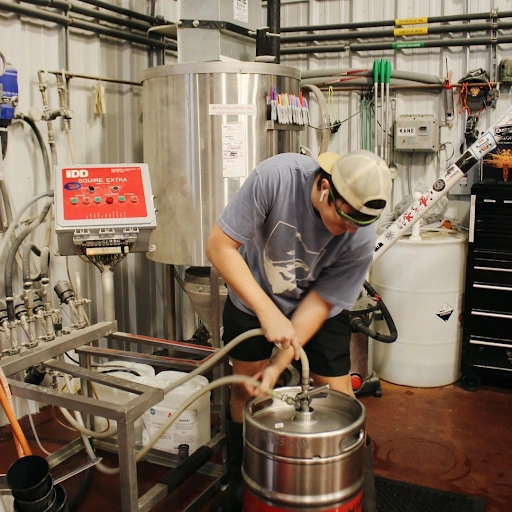
A brewery behind the scenes is rarely as quiet as it looks from the taproom. Brewing can involve preparing ingredients, brewing a fresh batch, transferring beer, checking samples, and monitoring beer as it develops.
At Little Miami Brewing Company, some days are focused on brewing something fresh. Other days involve transferring finished beer or pulling samples to see how a batch is progressing. That ongoing work is part of what makes a working brewery different from simply serving beer.
Our brewers bring more than 25 years of combined craft brewing experience to the process, with Brewmaster Jim Strelau having more than 25 years of brewing experience and multiple Great American Beer Festival medals.
Why Brewery Equipment Matters to Your Pint
You may not think about a mash tun or fermentation vessel when you take your first sip, but the equipment behind the scenes plays a major role in consistency and quality.
Good brewing equipment allows brewers to control important parts of the process, including:
- How grain is mashed and sugars are extracted
- How wort is boiled and hops are incorporated
- How fermentation takes place
- How beer is monitored before it reaches the tap
The result is the part you actually experience: a beer with its intended flavor, aroma, body, and character.
Craft Beer Brewing You Can Actually See
One of the best things about visiting a brewery is getting closer to the process. At Little Miami Brewing Company, the brewing operation is part of the atmosphere rather than something completely hidden away.
Our brewery and taproom are located in an open, airy brick warehouse along the Little Miami River and Bike Trail. You can enjoy fresh small-batch craft beer, brick-oven artisan pizza, and the riverside setting while being part of the environment where the beer is made.
Curious about what is currently pouring? Explore LMBC’s craft beers before your visit and see what catches your eye.
FAQs
What equipment is used to make beer?
Common brewery equipment includes mash tuns, brew kettles, fermentation vessels, and packaging equipment. Each helps turn raw ingredients into finished beer.
How does a brewery make beer?
Brewers mash grain, separate and boil the wort with hops, cool it, add yeast, and allow fermentation before serving or packaging the beer.
What makes a craft brewery different?
Craft breweries often focus on small-batch production, distinctive recipes, and hands-on brewing. At LMBC, our 7-barrel brewery produces rotating and seasonal craft beers.
Can you visit Little Miami Brewing Company?
Yes. Visit our taproom in historic Old Milford for craft beer, brick-oven pizza, and Little Miami River views. Plan your visit to LMBC and experience a working brewery in person.
From Brewing Equipment to Your Table
The next time you order a pint, take a second to think about everything behind it. Grain had to be prepared. Wort had to be produced and boiled. Hops had to be added. Yeast had to do its work. Brewers had to monitor the batch and make sure it was ready.
That is the beauty of craft beer brewing. The finished pint may look simple, but getting it there takes equipment, experience, patience, and plenty of attention to detail.
At Little Miami Brewing Company, you can experience that process in the place where it happens. Stop by our Milford taproom at 208 Mill Street, grab a fresh Little Miami Brewing Company beer, order a brick-oven pizza, and enjoy the Little Miami River just outside.